Permits
Dumpster Permits in Saginaw, MI and Nearby Towns
Driveway first: a Saginaw street spot needs a City Engineer permit, state highways have no container permit, and each nearby town has its own rules.
Sizing · 7 min read
Pick too small and you pay for a second pickup. Pick too large and you pay for space you never use. Here is how we match the size to the job when you call.
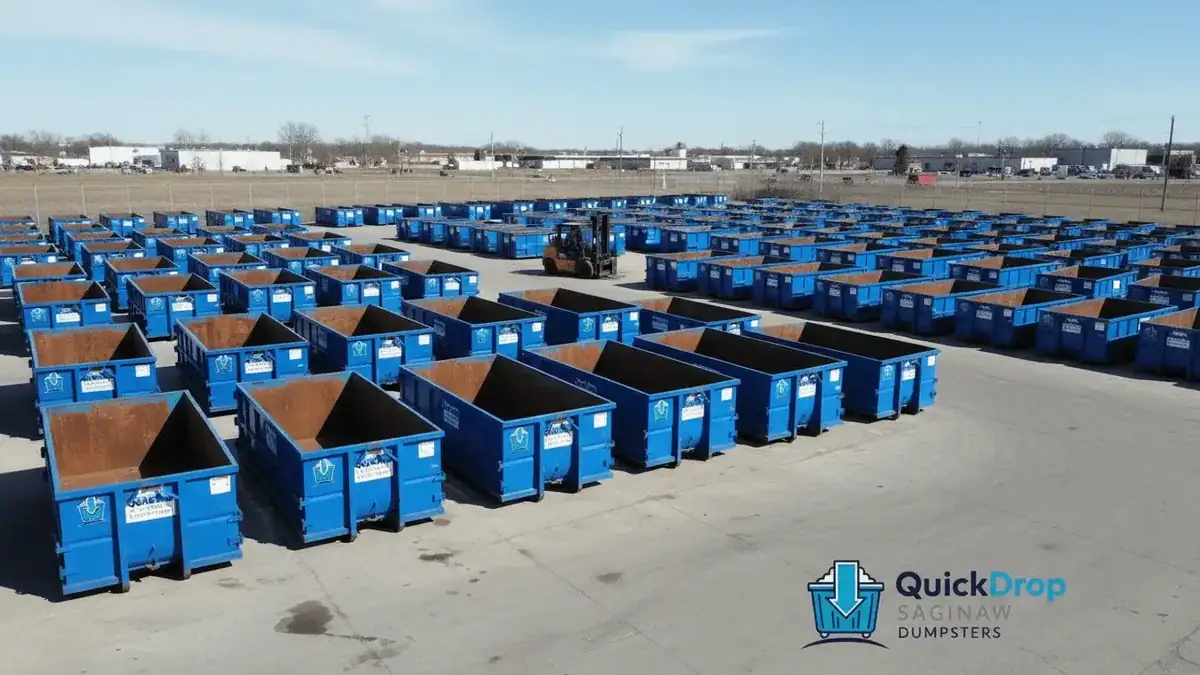
For most whole-home projects around Saginaw, the 20 yard dumpster is the place to start. It is one of our most requested sizes because it balances capacity and footprint, and it handles multi-room renovations, roofing tear-offs, landscaping and yard cleanups, and estate and foreclosure cleanouts. Go 10 yard for a bathroom or small kitchen remodel, a garage or attic cleanout, flooring, tile or carpet removal, yard debris or a minor roofing job. Go 15 yard for medium home renovations, deck or fence removal, flooring and carpet disposal and single-room remodels. Go 30 yard for new home builds and demolitions, full house cleanouts, commercial remodeling and large roofing jobs, and 40 yard for commercial construction and demolition, major renovations or multi-unit projects and large-scale cleanouts. Not sure? Call (989) 930-1786 and we help you pick.
A few rules of thumb from the jobs we see. Garage and single-room cleanouts fit a 10 or a 15, whole-home cleanouts and mid-size remodels suit a 20, and additions, new construction and commercial jobs usually need a 30 or a 40. Kitchen remodels usually need a 10 or a 15, and a roof replacement of around 2,000 square feet usually uses a 15; most residential roofing jobs fit a 15 or a 20. Deck teardowns, flooring removal and roofing tend to be heavy, so lean smaller on volume but confirm the weight allowance. If your project mixes bulky and heavy debris, it often makes sense to size up slightly rather than risk a second haul.
All five are open-top roll-offs about 8 feet wide. The 10 and 15 are shorter boxes; the 20, 30 and 40 share a length of about 22 feet and simply get taller. Pickup truck loads are a rough guide to volume. The weight column is the typical limit for each size, which depends on the type of debris.
| Size | Approx. L × W × H | Holds about | Typical weight limit | Typical uses |
|---|---|---|---|---|
| 10 yard | 12' × 8' × 3.5' | 3 pickup loads | 2–3 tons | Small cleanouts, bathroom remodels, yard debris |
| 15 yard | 14' × 8' × 4.5' | 4–5 pickup loads | 2–3 tons | Garage cleanouts, flooring, medium remodels |
| 20 yard | 22' × 8' × 4.5' | 6 pickup loads | 3–4 tons | Kitchen remodels, roofing, large cleanouts |
| 30 yard | 22' × 8' × 6' | 9 pickup loads | 4–5 tons | Full home renovations, construction debris |
| 40 yard | 22' × 8' × 8' | 12 pickup loads | 5–6 tons | Commercial projects, demolition, large cleanouts |
Most people under-count the pile. Walk the house or the job before you call, estimate how many pickup loads you expect, and tell us what the material is. Choosing the right size comes down to honestly estimating your debris before delivery day, and our team helps you choose based on your debris type, the weight and your project timeline, so you get the best value the first time.
Volume and weight are two separate limits. Heavy materials such as concrete, shingles or dirt fill weight limits quickly even in a small container, while bulky but lightweight items such as furniture or yard waste take up space without adding much weight. Each size has a typical weight limit, from 2–3 tons on a 10 yard up to 5–6 tons on a 40, depending on the type of debris. Ask about the weight limit before you load, because going over it is one of the most common sources of surprise charges, and if you are getting rid of dirt, concrete, roofing shingles or tile, our team will help you stay within the limit to avoid overage charges.
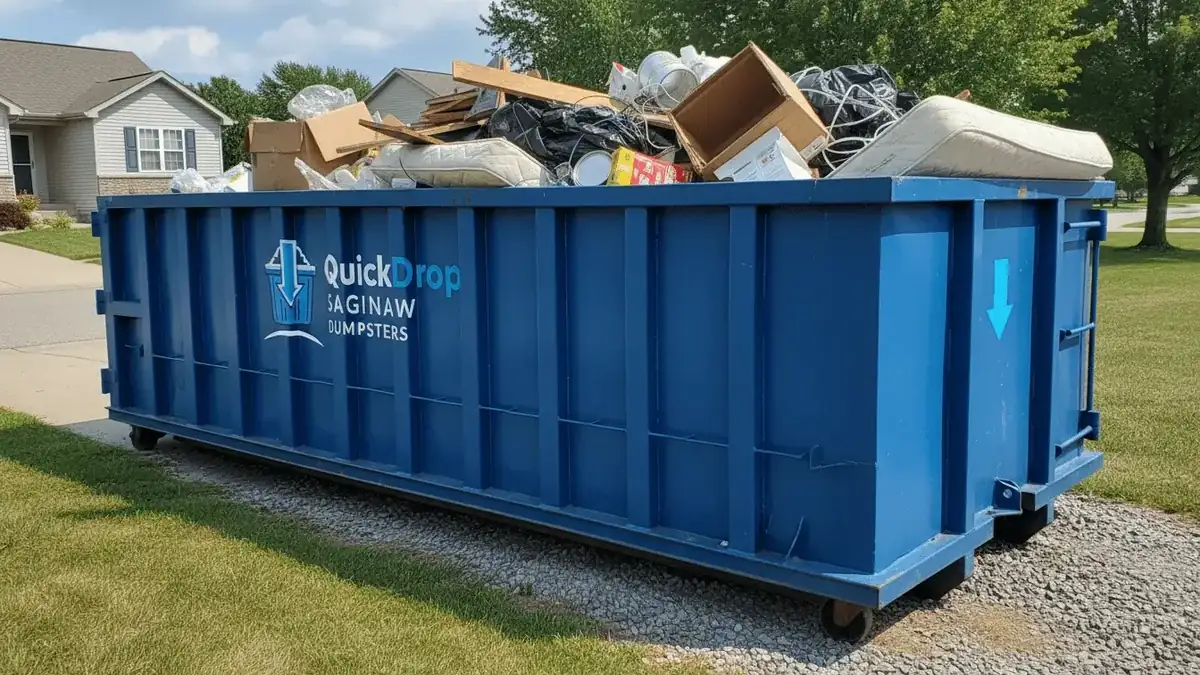
Concrete, brick and asphalt go in limited loads, and heavy materials such as concrete and shingles should be kept separate from lighter debris. Load evenly, keep heavier debris toward the bottom, and keep everything level with or below the top rim for safe transport. Michigan law says a vehicle may not be driven or moved on a highway unless it is constructed or loaded to prevent its contents from dropping, sifting, leaking, blowing off or otherwise escaping, and a load that is not completely enclosed has to be covered or securely fastened (MCL 257.720). An overfilled box cannot be covered properly, so if you need more space, call us and we will arrange a swap or an additional bin.
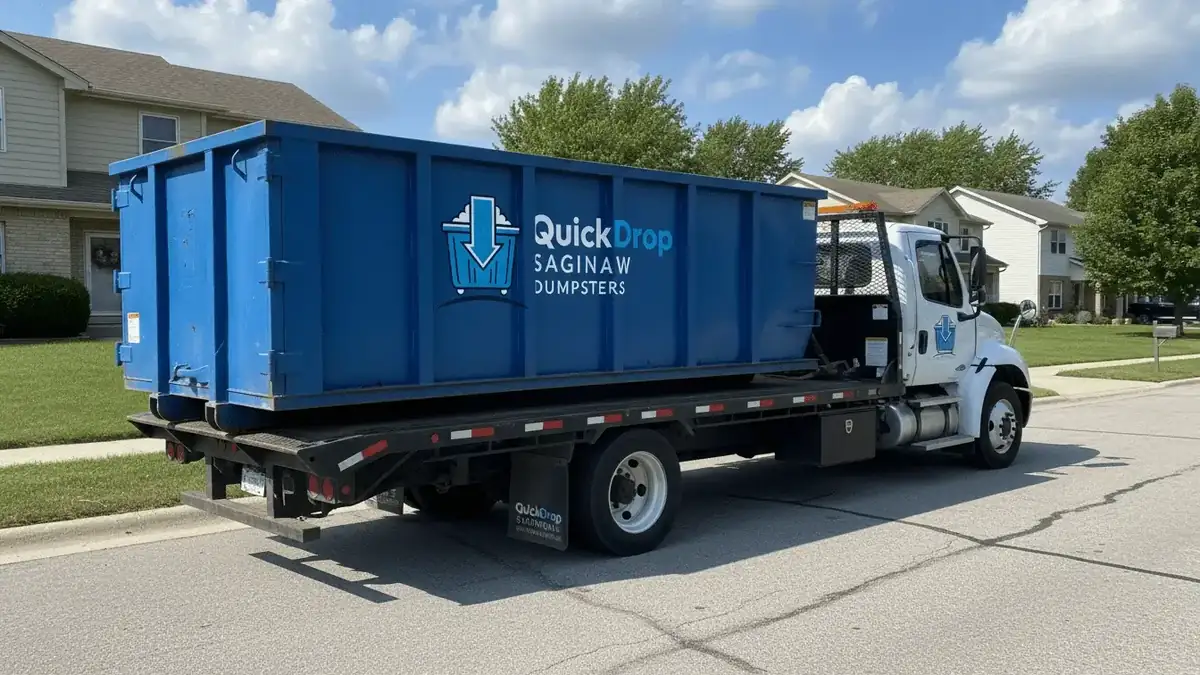
Check the length first: about 12 feet for a 10 yard, about 14 for a 15, and about 22 feet for the 20, 30 and 40, all about 8 feet wide. Measure your driveway or placement area ahead of time so we know the container will fit, and clear away vehicles, low branches and any obstacles before the scheduled drop-off. A flat, accessible surface such as a driveway works best. Our drivers use boards and careful placement to protect concrete and asphalt, and we keep containers off sidewalks and drainage areas. Once it is placed, please do not move the dumpster; if it needs to move, call us. You do not need to be home for delivery as long as the area is clear. If you have HOA rules or tight access, just let us know.
In Saginaw, keep it on your property where you can. We found no City dumpster permit for a bin on your own driveway, but a container in a City street, alley or other right-of-way needs a written permit from the City Engineer first (City Code § 96.004). The street has two more catches: no vehicle may park on any City street between 3 and 6 a.m. (§ 72.15), and no trailer may sit on a City street for more than one hour at a time (§ 72.18). So the driveway comes first. In Chesaning, the zoning code lists roll-off containers among commercial vehicles, so we check placement with you before delivery, and in Essexville the bin sits further up the driveway, clear of the outlawn. The permit guide covers every town we list.
City of Saginaw trash goes through the Mid Michigan Waste Authority, a public authority of 34 member communities in the Saginaw Valley, and it is built for household trash. The City Code lists what is not collected: stones, bricks, plaster, shingles, lumber, demolition and building materials, concrete, sand, gravel and earth, liquids such as oil, paint and solvents, and any material resulting from contract work such as construction or demolition (§ 50.06). Cans are capped at 35 gallons and 50 pounds with no more than 20 bags a household a week (§ 50.05), and MMWA residents can set out up to two bulk items a week. That covers a couch, not a remodel.
The City's Convenience Station behind Public Works at 1435 S Washington Ave takes building materials, furniture and trash from City residents on the second Saturday of each month, 8 a.m. to noon, one dumping a month, with no roofing debris or shingles, and cement, block and brick kept apart from everything else. Nearby towns draw the same line: Bay City bans contractor debris at the curb (§ 86-75), and Vassar's trash service will not take construction, remodeling or demolition debris beyond one bushel basket (§ 58-39). A roll-off is for the pile that is bigger, heavier or sooner than any of that allows.
Describe the job on the phone, with the materials, the scope and the timeline, and we recommend the size that fits. Changing sizes is easiest before delivery, so call us as soon as the plan changes. If the project grows after the box arrives, we can arrange a swap or an additional bin.
From this guide
Kitchen remodels usually need a 10 or a 15 yard. A full kitchen and bathroom remodel is often a 20, and once the work spreads to several rooms or the whole house, a 30 is the usual call.
Most residential roofing jobs fit a 15 or a 20 yard, and a roof replacement of around 2,000 square feet usually uses a 15. Shingles are heavy, so confirm the weight limit before loading to avoid overage charges.
A 10 or 15 yard handles a typical garage cleanout. Yard debris and light tree trimming fit a 10, bigger yard projects a 15 or 20, kept as their own load. A whole-home cleanout is usually a 20.
Often yes, if you contact us before delivery. It is always easier to change the size before the container is on your driveway. If the job grows after delivery, we can arrange a swap or an additional bin.
Keep reading
The rest of the series, same approach — official sources, no filler.
Permits
Driveway first: a Saginaw street spot needs a City Engineer permit, state highways have no container permit, and each nearby town has its own rules.
Cost
We quote every Saginaw dumpster by phone. What a flat rate covers, what moves the price, and the drop-off options and permit rules worth knowing.
Guide
Everything in one place: how a roll-off rental works in Saginaw and nearby towns, sizes and weights, placement and permits, Michigan bans and loads.
Ready when you are
Call (989) 930-1786 with the address and what is going in. A quote and a delivery window before you hang up.
(989) 930-1786Open 24 hours, 7 days